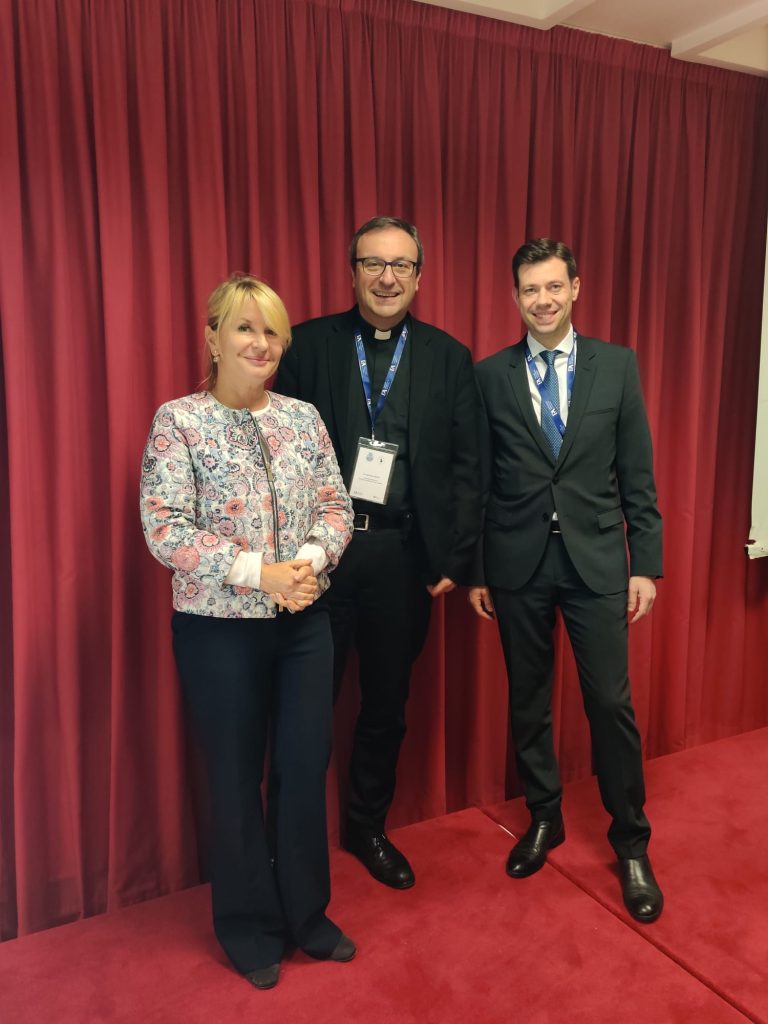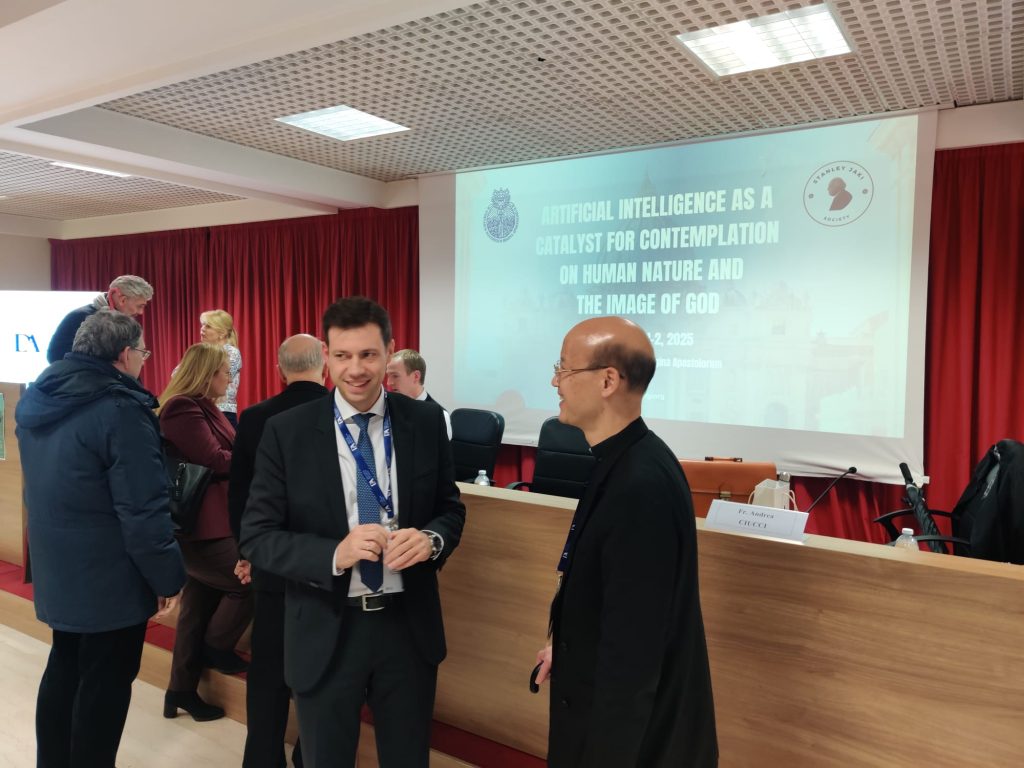
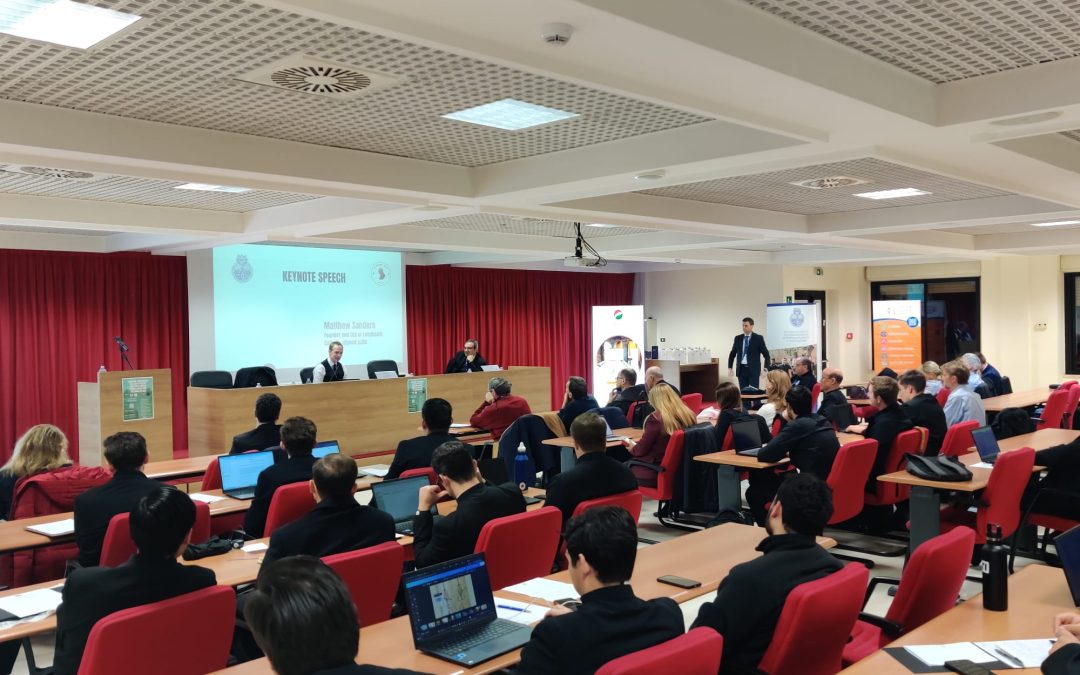
The event took place at the Pontifical Athenaeum Regina Apostolorum, the University where Fr. Stanley L. Jáki so gladly delivered regular lectures. We organized this conference in the spirit of Fr. Jáki to mark the occasion of the Jáki Society joining the Rome Call for AI Ethics, an initiative of the Pontifical Academy for Life dedicated to promoting ethical artificial intelligence.


Fr. Jáki wrote a seminal book in 1969 on the impossibility of artificial minds. As Pope Leo observed, AI bears the mark of the human hand that created it; it is therefore no coincidence that it resembles us so closely. At the same time, AI encourages us to reflect on our humanity and on our relationship with God. Our aim was to pursue this reflection in fidelity to the Catholic faith and its teachings. Pope Leo also emphasized that every design choice expresses a particular vision of what it means to be human. According to Father Jáki, the relationship is key, so the role of technology is decided by humans.
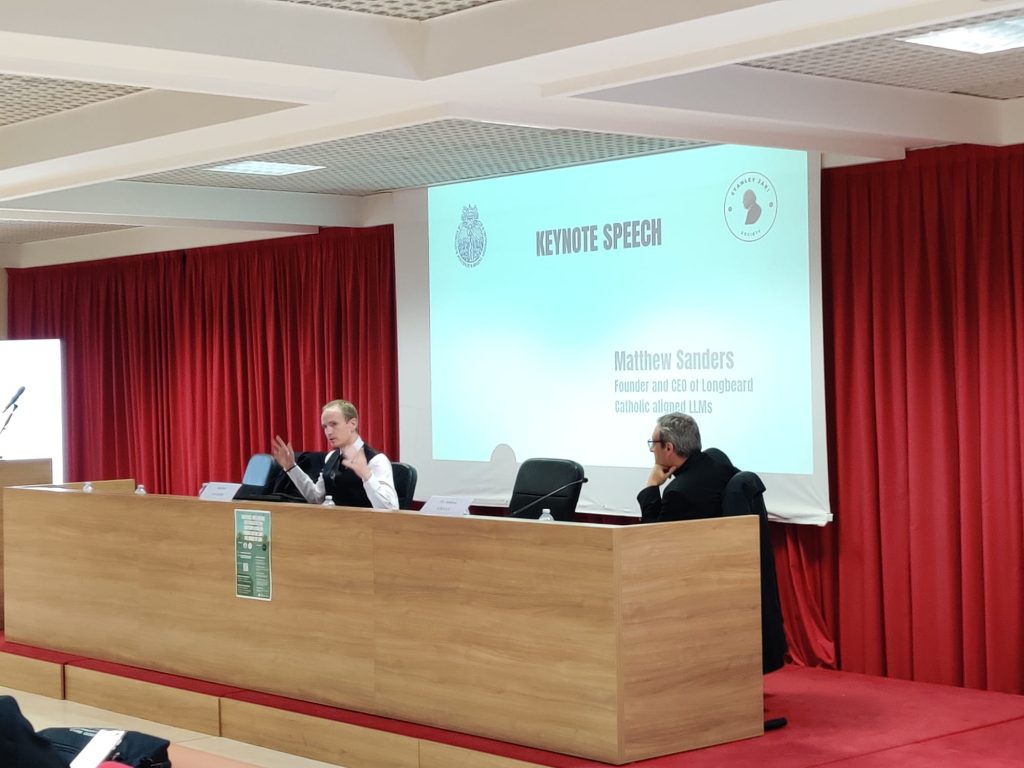
We invited two distinguished keynote speakers—figures highly respected not only by our Society but also across the global Catholic-aligned AI community:
Fr. Andrea Ciucci, Secretary General of the Renaissance Foundation at the Pontifical Academy for Life, trustee of the Vatican’s ethical AI initiative, the Rome Call, has shown remarkable openness and support toward our Society from the very beginningl. We have likewise found great openness in Matthew Sanders, founder and CEO of Longbeard, a leading figure in building and inspiring the international Catholic-aligned AI community.
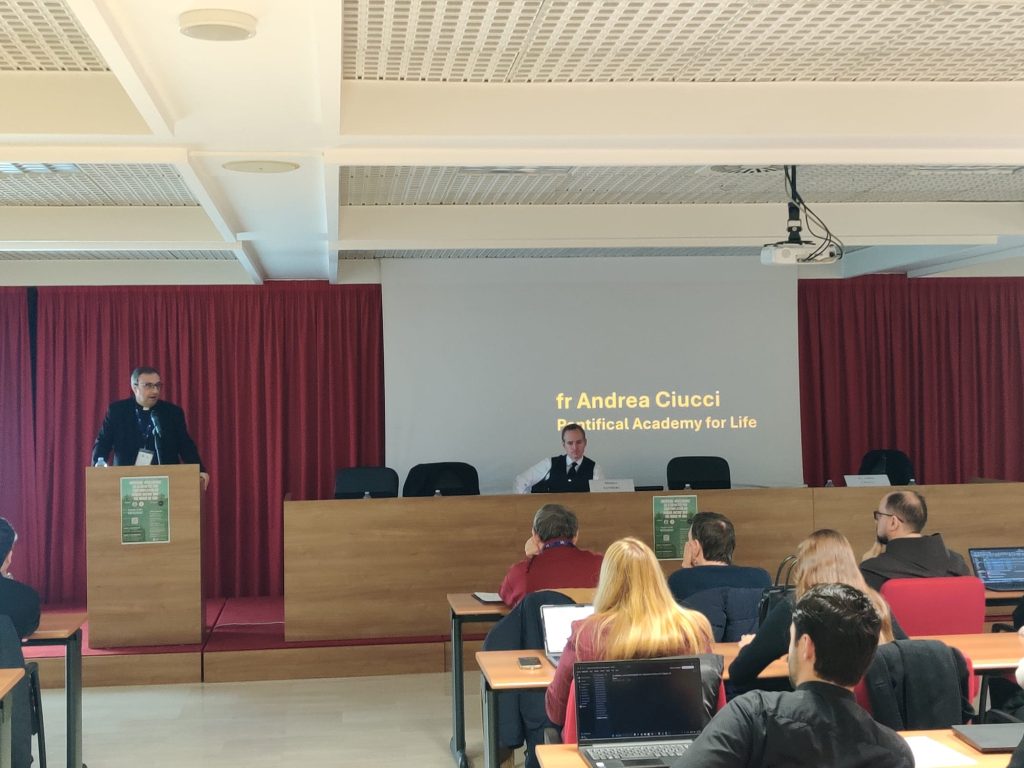
Among the speakers were:
Fr. Alberto Carrara, L.C., Dean of the Faculty of Philosophy, Pontifical Athenaeum Regina Apostolorum; Corresponding Member, Pontifical Academy for Life (Rome)
Fr. Alex Yeung, L.C., Professor of Philosophy and Director of the Science and Faith Institute, Ateneo Pontificio Regina Apostolorum (Rome); member of the Jáki Society
Stacy Trasancos, Professor of Catholic Studies, Seton Hall University (South Orange, NJ)
Daniele Bruno, President, Fondazione Giovanni Paolo II per la Gioventù
Fr. Ágoston Bagyinszki, O.F.M. Professor of Fundamental Theology; Rector of Sapientia College of Theology of Religious Orders (Budapest); member of the Jáki Society
Lucía Guerra Menéndez, Associate Professor of Physiology, CEU–San Pablo University (Madrid); member of the Jáki Society
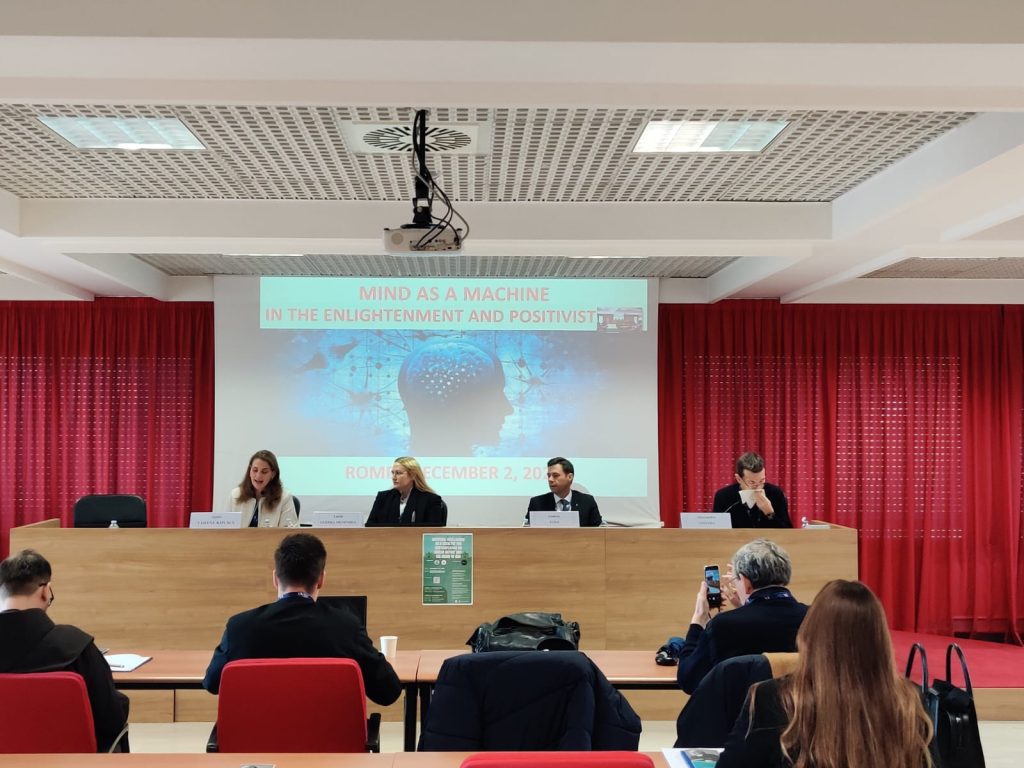

Our president, András Tóth, argued that—as Scripture teaches—there is a vicious cycle associated with such technologies. In this cycle, the anthropomorphization of AI, driven by profit motives, shapes people’s attitudes, strengthens the perception of AI as a kind of personality, and in turn generates further profit. This cycle can be broken if the underlying capitalist intent is exposed. However, if an individualistic society actively seeks such artificial relationships, there is a real concern that neither philosophy nor theological reflection will determine whether AI comes to be recognized socially, or even legally.