Could you briefly describe what you do and how you first came into contact with Father Jaki’s work?
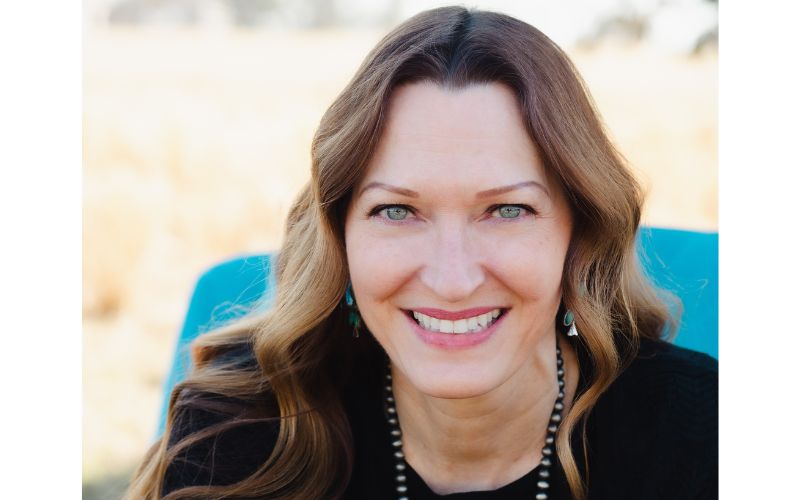
Inspired by Fr. Jaki’s breadth of knowledge, I am an interdisciplinary scholar. I have a Doctorate in Chemistry from The Pennsylvania State University. After I became Catholic, I wanted to know more about the Faith, so I earned a Master’s in Theology at Holy Apostles College & Seminary. In the first course, “Philosophy for Theologians,” the first assignment was to read Fr. Jaki’s book The Savior of Science. That was in 2010. His thesis that science was born of Christianity, having been “stillborn” in other ancient cultures resonated with me. I have worked ever since to pass on his teaching. I earned a second Master’s in Philosophy, also at Holy Apostles, and am now working on a second Doctorate in Philosophy. I am an Adjunct Professor at Seton Hall University in the Catholic Studies Program and at Holy Apostles College & Seminary, where I am also the Undergraduate and Dual Enrollment Program Director. I have written six books and numerous articles and book chapters on the intersection of science, philosophy, and theology.
What aspects of Jaki’s work would you highlight as especially relevant in today’s world?
His thesis that modern science was born of Christianity, having been stillborn in ancient cultures, is among his most important work. He builds the case by citing abundant primary and secondary sources in Science and Creation. He draws upon the ideas of Pierre Duhem, but he also incorporates his theological training to tie the emergence of modern science as a viable discipline with its own methods and set of laws to divine revelation, namely the Holy Trinity and the Incarnation of Christ. Through this lens, we see nature as creation, a universe of order and goodness with a beginning in time and purpose toward an end.
His book, Brain, Mind and Computers, is likewise an important work. Written in 1969, Jaki anticipated the problems we are now experiencing with artificial intelligence (AI) and in the fields of neuroscience, emergentism, and mind-body philosophy.
Why do you think Jaki is being rediscovered today?
He critiqued his contemporaries such that his writing gives us insight into the problems of his time, but his ideas were also timeless. He is a rare academician in that he held doctorates in both theology and physics, in addition to his intense studies in the history of science and natural philosophy. He could write about various topics and always bring us back to Christ.
How does your field of research relate to Jaki’s thought?
As a chemist with graduate degrees in both philosophy and theology, and who is pursuing a second terminal degree in philosophy, I aspire to author books in a similar vein as Fr. Jaki did, books that comment on the faith and science issues of our time but in a timeless way. As Fr. Jaki knew, the materialistic, mechanistic worldview of atomism has been insufficient for the discoveries of modern chemistry and physics. Atomic theory is still taught to school-aged children as if the world is made up of building blocks called atoms. Yet the materialistic philosophy of nature born of atomism cannot explain something as basic as the molecule. Modern science stands in dire need of an updated natural philosophy, and I find the teaching of St. Thomas Aquinas to be most relevant and overlooked. A restoration of such teaching is needed because it is right, and Fr. Jaki’s insights into the intimate connection of science and the Catholic Church provide the way to bring about this restoration. I think the Scientific Revolution is not complete. If modern science was born of Christianity, then the 17th century infant is now an adolescent, autonomous and confident, but still in need of guidance from its Mother.
How do you see the role and significance of the Catholic Church in the United States? Since the Pope is also American, would you say that one of the main sources of strength for the Catholic Church today is in North America?
The Catholic Church stand for all that is eternal. In the United States as for anywhere else in the world, the Church is significant because it is the reminder, the rock, which anyone can look to or grasp for guidance and safety in turbulent times. Catholics in 2026 have a president who is not against their religion and who very much supports Christian ideas. We have a vice-president who professes the Catholic Faith. Yet, many of our policies at both the federal and state level do not uphold social justice or the dignity of human life. It is a pleasant surprise that Pope Leo XIV is an American, but that means he is more attuned to the issues Americans face. I think it is good that he is more globally-minded and seems to focus on regions of the world wherever he thinks Christ’s grace is needed most, without limiting himself to an adherence to the nation of his upbringing. We are experiencing a revival in the United States, especially among young people disillusioned by the trappings of a device-based and internet-based childhood. My hope is that people everywhere see our Pope as an inspiration to live better lives, search for truth, and accept the grace of Christ.